Why Accountably Isn’t an AI Wrapper

(And Why That Distinction Matters)
If you’ve spent any time evaluating AI products in the last two years, you’ve developed a reflex. New app launches. Slick landing page. “Powered by AI.” You click through, poke around, and within about ninety seconds, you recognise the shape of the thing: it’s ChatGPT in a trench coat. A prompt taped to the front of a language model, dressed up with a colour scheme and a subscription fee. An AI wrapper.
So when you hear “AI accountability coach for online addiction,” that reflex fires. Fair enough. It should.
But Accountably isn’t a wrapper. And the difference isn’t cosmetic; it’s architectural, philosophical, and (if you’re someone struggling with a compulsion that’s eating your life) it’s practical in ways that actually matter. Let me explain why.
What an AI Wrapper Actually Is
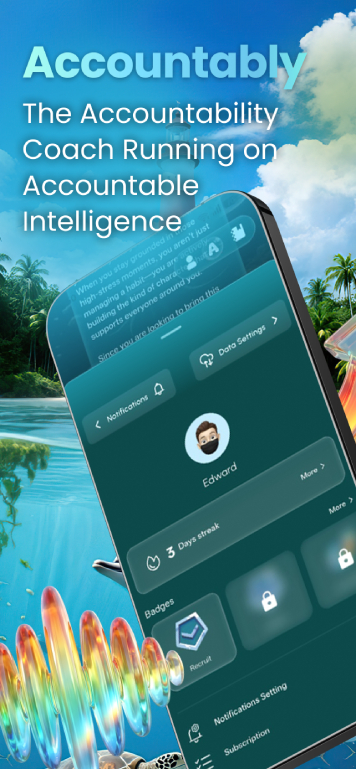
An AI wrapper takes a foundation model (GPT, Claude, Gemini) and puts a thin layer on top: a system prompt, maybe some UI polish, maybe a branded personality. The model does all the thinking. The wrapper does the presenting. Strip it away, and you’ve got the same conversation you could have had for free.
The tell is usually this: ask the product to do something outside its supposed speciality. If it happily obliges, it’s a wrapper. A “fitness AI” that will also write your wedding speech is not a fitness product. It’s a chatbot with a gym logo.
The deeper problem is incentive alignment. General-purpose AI is designed to be helpful, which in practice means it’s designed to keep you engaged. It wants to answer your question, and then your next question, and then your next one. Engagement is the metric. For most use cases, that’s fine. For addiction recovery, it’s the exact opposite of what you need.
The Methodology Is the Product
Accountably was built around a specific clinical insight: online compulsions (doomscrolling, pornography, gambling, gaming, compulsive spending) are not moral failures. They are emotional regulation challenges. The brain’s reward system has been deliberately hijacked by platforms that employ variable reward schedules, supernormal stimuli, and engagement algorithms designed by some of the most well-funded research teams on the planet. You are not weak. You are outgunned.
That reframe changes everything about how the product works.
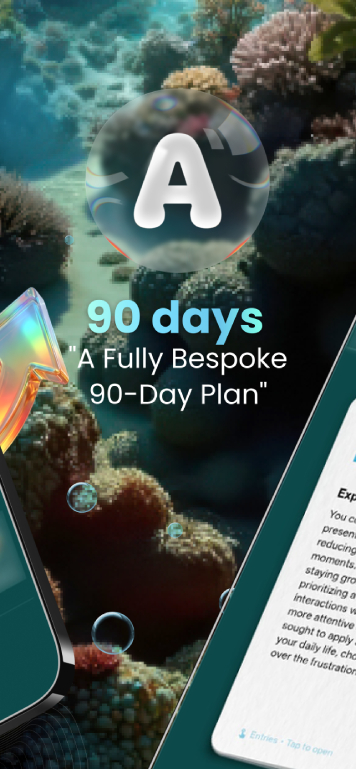
Instead of shame counters (which trigger binge cycles when streaks break) or dumb blockers (which you eventually bypass, because you are a resourceful human being with a phone), Accountably implements what we call a Dynamic Recovery Protocol. This is a personalised recovery plan that synthesises multiple evidence-based approaches: cognitive behavioural therapy, elements of twelve-step methodology, faith-based frameworks where appropriate, and emotional regulation training. It adapts as you progress. It evolves when you hit a plateau. It meets you where you are, not where a template assumes you should be.
This is not a system prompt. You cannot replicate it by typing “act as an addiction counsellor” into ChatGPT. The methodology was designed before the AI was chosen; the AI is the delivery mechanism, not the product.
Socratic Journaling: Asking Better Questions
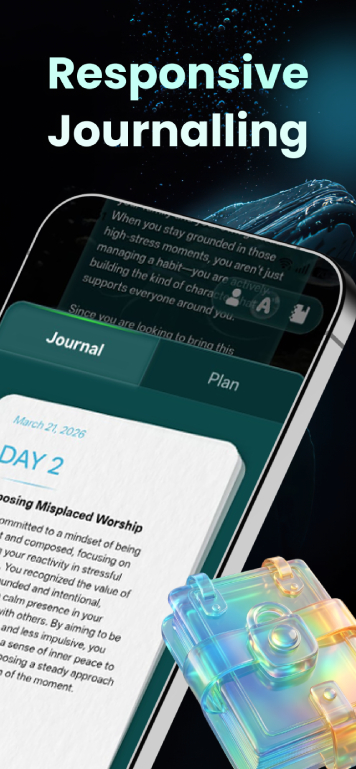
One of the hardest parts of recovery is honesty. Not honesty with other people; honesty with yourself. Most people struggling with compulsions know what they’re doing. They don’t know why. The surface behaviour is obvious. The emotional architecture beneath it is invisible.
Accountably uses Socratic journaling to get beneath the surface. Rather than giving you a blank page (which most people stare at and then close), the system asks guided questions designed to move you from symptoms to causes. Not “how do you feel?” but questions calibrated to help you identify the emotional trigger, the context, the pattern. The system generates summarised daily diaries, tracks patterns over time, and surfaces insights you might not have spotted on your own.
This is where the distinction from a wrapper becomes concrete. A wrapper could ask you questions. It could even ask good ones sometimes. But it has no memory architecture designed for longitudinal pattern recognition across weeks and months of entries. It has no framework for distinguishing between when a user is rationalising and when they are genuinely reflecting. It has no protocol for when to push harder and when to back off. Accountably does, because those decisions were engineered into the product’s logic, not bolted onto a prompt.
Privacy by Design, Not by Promise
Here is something that should bother you about most AI wellness products: your most vulnerable confessions are being processed on someone else’s server, often by a company whose primary business model depends on data. Your journal entries become their training data. Your worst moments become their product.
Accountably doesn’t work that way. Your conversations are between you and the AI. We don’t read your messages. We don’t store them on our servers. We don’t mine your recovery journal for insights to sell. The data is yours, full stop. Nobody at Accountably is reviewing what you wrote at 2am when the compulsion hit. Nobody can, because the system was designed so that your private struggles stay private.
This matters especially for the 90% of people who never seek professional help for online compulsions, often because the stigma of admitting the problem feels worse than the problem itself. If the tool requires you to wonder whether some product team is reading your most vulnerable confessions over their Monday morning coffee, you’ve recreated the exact trust barrier that stops people from getting help in the first place.
Anti-Engagement by Design
This is the part that sounds counterintuitive until you think about it for thirty seconds.
Every major tech platform is optimised for engagement. More time on screen. More clicks. More sessions. More data. The entire architecture of the modern internet is designed to keep you using it. ChatGPT is no different in this respect; it’s designed to be maximally helpful, which means maximally engaging.
Accountably is designed to reduce your engagement with the very platforms that are causing the problem. Its success metric is not “time spent in app.” Its success metric is whether you’re spending less time lost in the compulsion and more time building the life you actually want. The AI is explicitly engineered to help you disengage, not to keep you talking.
Think about that for a moment. An AI product whose goal is for you to need it less. That’s not a wrapper. That’s a fundamentally different incentive structure.
Why This Distinction Matters
The AI wrapper problem isn’t just an aesthetic complaint. For most software categories, a wrapper is merely disappointing: you paid for something you could have got for free. Annoying, but nobody gets hurt.
Addiction recovery is different. If someone struggling with a pornography compulsion, or a gambling problem that’s bleeding their family’s finances, or a social media habit that’s replaced every real relationship in their life, reaches out to an AI tool for help and gets a chatbot wearing a lab coat, the consequence isn’t just wasted money. It’s a missed intervention. It’s someone who took a difficult step and got a performance of care instead of the real thing. And the next time they consider reaching out, they’ll remember that it didn’t work.
Accountably exists because the problem is real, the people affected deserve better than a costume, and the methodology to help them should be built into the bones of the product, not sprinkled on top.
If you’re evaluating whether this is another wrapper, here’s the test: strip away the AI entirely. What’s left? For a wrapper, nothing. For Accountably, you’d still have a clinical framework, a recovery methodology, a privacy architecture, and a clear theory of change. The AI makes it accessible, affordable, and available at 3 am when the compulsion hits. But the AI is not the product.
The product is the path out.
Try Accountable Intelligence Today.